
Arizona v. United States


Please register to download a PDFs of this resource
Overview: Students will examine a controversial law passed in the state of Arizona that directs law enforcement officers to investigate suspected unauthorized immigration. They will recognize the constitutional issues of preemption, reasonable suspicion, and equal protection and relate them to the facts of the Arizona law. Students will then judge whether several sets of facts are valid examples of reasonable suspicion. They will also evaluate the law in a simulation using the GRADE policy-analysis rubric.
Arizona v. United States
States and Immigration Law
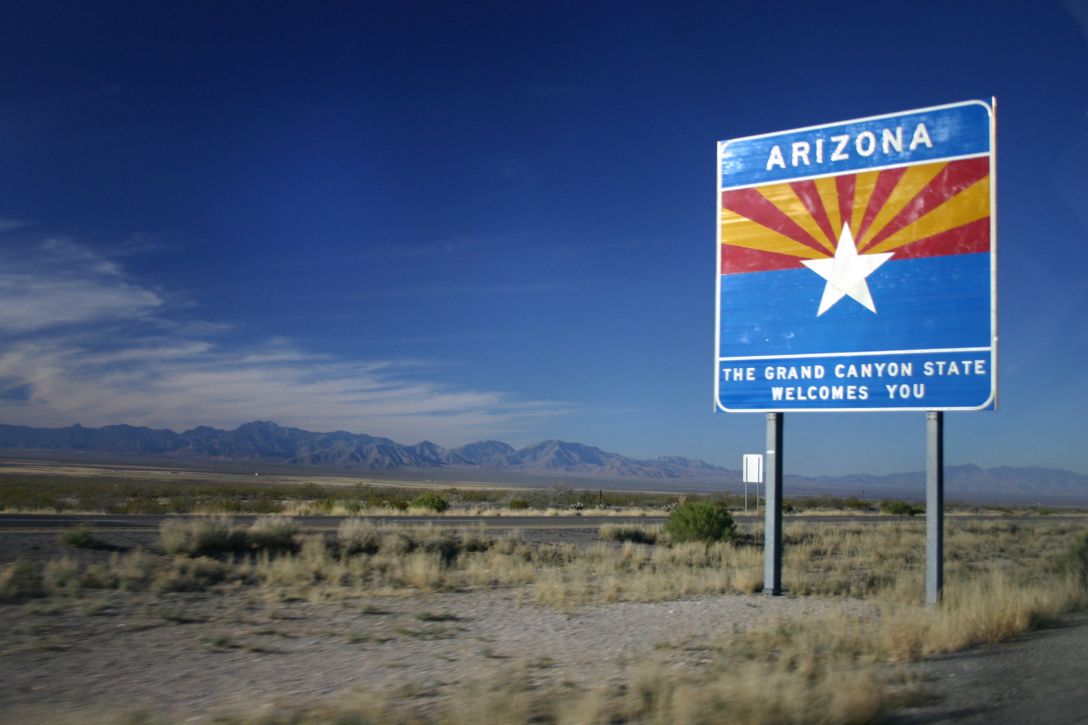
On April 23, 2010, Arizona Governor Jan Brewer signed into law a controversial state immigration bill. The new law was senate bill 1070 (“SB 1070”). It set up criminal penalties for unauthorized immigrants who do certain actions, such as seeking a job. It also gave police officers authority to investigate violations of immigration law.
At a press event, Governor Brewer stated that SB 1070 was necessary because the federal government had not been controlling unlawful immigration. In March 2010, for example, rancher Robert Krentz was found shot to death in his vehicle in an area known to be used by smugglers of unauthorized immigrants. Investigators believe he was killed by smugglers.
Based on this and other incidents, many in the state called on federal authorities to take more action. They wanted the federal government to seal the border. They even wanted the president to send in the National Guard.
In the meantime, the Arizona legislature passed SB 1070. Its stated purpose was to have state and local law enforcement “deter the unlawful entry and presence” of unauthorized immigrants.
How far can states like Arizona go, however, to enforce federal immigration laws? Because of widespread concerns that SB 1070 did go too far, the U.S. government eventually challenged the law in court.
What SB 1070 Said
The law bears the name Support Our Law Enforcement and Safe Neighborhoods Act. Most of it revised Arizona’s criminal code. It contained some controversial provisions, among them:
Section 2(B) directs police to question those they reasonably suspect of unauthorized status. This section states: “For any lawful stop, detention or arrest made by a law enforcement official…where reasonable suspicion exists that the person is an alien who is unlawfully present in the United States, a reasonable attempt shall be made, when practicable, to determine the immigration status of that person.”
Section 3 makes it a crime for a non-citizen not to have proof of legal status. The law states that a non-citizen can be guilty of a misdemeanor for “willful failure to complete or carry an alien registration document…in violation of ” federal immigration law.
Section 5(C) makes it a misdemeanor for an unauthorized immigrant to seek work in Arizona. This section states that it is a crime for “an unauthorized alien to knowingly apply for work, solicit work in a public place or perform work as an employee or independent contractor….”
Section 6 allows police officers to arrest any immigrant for committing a crime that would make the immigrant “removable” (or deportable). This section states that an officer “without a warrant, may arrest a person if the officer has probable cause to believe…[the person] has committed any public offense that makes [him] removable from the United States.”
Legal Challenges to SB 1070
The American Civil Liberties Union (ACLU) and other civil rights organizations argued that Section 2(B) allows officers to violate the equal protection clause in the 14th Amendment of the U.S. Constitution. Of Arizona’s 6.5 million residents, an estimated half million are unauthorized immigrants. Most of them come from neighboring Mexico.
Critics questioned how an officer can have “reasonable suspicion” that someone is an unauthorized immigrant without using the immigrant’s race or ethnicity as the main factor. Singling out racial or ethnic groups for investigation is called “racial profiling.”
Supporters of SB 1070 argued that the law can be neutrally applied. It does not depend on racial profiling. After signing the bill, Governor Brewer said her signature represents “steadfast support for enforcing the law — both against illegal immigration and against racial profiling.” She also issued an order for training officers in protecting the civil rights of Arizona residents.
The U.S. Department of Justice also challenged the law in court on the grounds that all the above sections of the law were preempted. Preemption simply means that federal law (made by Congress) is higher than state law (made by Arizona or any other state). Federal law therefore trumps state law when the two conflict.
Preemption comes from the U.S. Constitution. The supremacy clause in Article VI states: “This Constitution, and the Laws of the United States which shall be made in Pursuance thereof…shall be the supreme Law of the Land.”
There are two kinds of preemption. If a state law makes it impossible for someone to comply with both state law and federal law, it is called conflict preemption. If, however, a state law merely says the same thing as a federal law, but Congress has thoroughly dominated that field of law, it is called field preemption. In either case, the state law is invalid.
SB 1070’s Day in Court
In July 2010, federal judge Susan Bolton issued an injunction in U.S. v. Arizona, stopping key sections of SB 1070 from going into effect until legal issues are resolved. (An injunction is a court order.) The injunction stopped the four sections listed above, which were the most controversial parts of the law. The state of Arizona appealed the case to the U.S. Supreme Court.
The issue in Arizona v. United States was whether each of the four challenged sections was preempted by federal law. (Because Arizona appealed, it appears first in the case name.) In a 5–3 decision, Justice Anthony Kennedy wrote the majority opinion that struck down three of the four provisions in question.
Section 3 made it a misdemeanor not to carry proof of legal immigration status. Writing for the majority, however, Justice Anthony Kennedy stated that the federal government’s laws had “occupied the field of alien registration.” Congress had made a “careful framework” of laws about registration. States, therefore, cannot impose penalties on persons guilty of violating those laws.
Section 5(C) — the part that made seeking work a crime — was preempted because federal law already imposed penalties on employers of unauthorized immigrants. Federal law is silent, however, about punishing employees. “Under Section 5(C),” wrote Justice Kennedy, “Arizona law would interfere with the careful balance struck by Congress with respect to unauthorized employment of aliens.”
The court found that Section 6 “would allow the State to achieve its own immigration policy.” This section allowed state officers to arrest a removable immigrant without a warrant. Under federal law, state officers may arrest a person who is removable only when the federal government requests that they do so. Section 6, therefore, “creates an obstacle to the full purposes and objectives of Congress.”
In contrast to the above sections, the court held that section 2(B) was not preempted. Because this section requires officers make a “reasonable attempt” to check if a person in a lawful stop or arrest is a legal resident, there is no way yet for the court to know if Arizona officers are using racial profiling. “The Federal Government,” wrote Justice Kennedy, “has brought suit against a sovereign State to challenge the provision even before the law has gone into effect.”
Soon after the decision, the U.S. Department of Justice requested that federal judge Bolton once again stop Section 2(B). Judge Bolton, however, allowed it to take effect. “This court will not ignore the clear direction” of the Supreme Court, she wrote. It will likely be challenged again. In the meantime, similar laws in many other states remain in effect.
For Discussion and Writing
- The Supreme Court decided that three sections were preempted by federal law: Sections 3, 5(C), and 6. For each one, decide if it was a conflict preemption or a field preemption and explain your answers.
- Justices Scalia, Thomas, and Alito dissented in part and concurred (agreed) in part with the majority in Arizona v. United States. Justice Scalia argued that states like Arizona are “sovereigns.” Therefore, they can control who enters their borders and who may stay. Do you agree? Why or why not?
- Reasonable suspicion is not sufficient to make an arrest. But it is evidence that a person is about to commit a crime or has committed a crime. It must be more than a mere “hunch,” and gives police authority to investigate. Do you think that an officer can have reasonable suspicion that someone is an unauthorized immigrant without using race or ethnicity? Why or why not?